
If There Is No Self, Who Is Responsible? | Vasubandhu, Mind & Moral Agency | Poorvam
Keynote Scholar / Speaker
Prof Monima Chadha
Monima Chadha is Professor of Indian Philosophy at the Faculty of Philosophy, University of Oxford. Her main research interests are in the Philosophy of mind in the classical Indian and contemporary western traditions, most recently focused on the Buddhis
Lecture Overview & Synopsis
If There Is No Self, Who Is Responsible? | Vasubandhu, Mind & Moral Agency | Poorvam
What if the mind does not require a permanent self?
And if there is no enduring self, who acts, who remembers, who owns our experiences—and who can be held morally responsible for what we do?
In this episode of *Authors in Conversation**, Professor **Monima Chadha* discusses her book Selfless Minds: A Contemporary Perspective on Vasubandhu's Metaphysics with **Nilambar Chakrabarti**, exploring one of the most provocative questions in Buddhist philosophy: how much of our understanding of the mind can we preserve without positing a self?
The conversation brings Vasubandhu's Buddhist philosophy into dialogue with contemporary philosophy of mind. It examines the relationship between **selfhood, subjectivity, agency, ownership, memory, autonomy, moral responsibility and ethical life**.
Rather than simply replacing the self with a conventional notion of the person, Professor Chadha explores whether Vasubandhu's arguments invite us to rethink what we mean by an agent in the first place. The discussion considers the idea that actions may be understood through mental states such as intention and desire, and asks what happens to our concepts of ownership and agency when we take Buddhist interdependence seriously.
The conversation also turns to a difficult contemporary problem: *Can there be morality and responsibility without an autonomous self?*
Questions explored in this conversation include:
• What does Buddhist philosophy mean by “no-self”?
• How does Vasubandhu rethink the notion of an agent?
• Can we explain memory, agency and ownership without a substantial self?
• Is the self the subject of experience—or its owner?
• Can moral responsibility survive the rejection of an autonomous self?
• What happens to autonomy when we take relationality and interdependence seriously?
• Can contemporary philosophy of mind learn from Buddhist metaphysics?
• What does Vasubandhu contribute to today's debates about consciousness and agency?
Professor Monima Chadha's approach seeks to place classical Indian philosophy in conversation with contemporary philosophical debates, asking how far Buddhist arguments about the self can travel into modern philosophy of mind.
This is a conversation about **Vasubandhu, Buddhist philosophy, the philosophy of mind, agency, autonomy, responsibility and the nature of the self**.
*Authors in Conversation* is a series bringing scholars and authors into sustained conversations about philosophy, literature, culture and the intellectual traditions of India.
If you find these conversations valuable, *subscribe and join us for more serious conversations on Indian thought, philosophy and culture.*
What if the mind does not require a permanent self?
And if there is no enduring self, who acts, who remembers, who owns our experiences—and who can be held morally responsible for what we do?
In this episode of *Authors in Conversation**, Professor **Monima Chadha* discusses her book Selfless Minds: A Contemporary Perspective on Vasubandhu's Metaphysics with **Nilambar Chakrabarti**, exploring one of the most provocative questions in Buddhist philosophy: how much of our understanding of the mind can we preserve without positing a self?
The conversation brings Vasubandhu's Buddhist philosophy into dialogue with contemporary philosophy of mind. It examines the relationship between **selfhood, subjectivity, agency, ownership, memory, autonomy, moral responsibility and ethical life**.
Rather than simply replacing the self with a conventional notion of the person, Professor Chadha explores whether Vasubandhu's arguments invite us to rethink what we mean by an agent in the first place. The discussion considers the idea that actions may be understood through mental states such as intention and desire, and asks what happens to our concepts of ownership and agency when we take Buddhist interdependence seriously.
The conversation also turns to a difficult contemporary problem: *Can there be morality and responsibility without an autonomous self?*
Questions explored in this conversation include:
• What does Buddhist philosophy mean by “no-self”?
• How does Vasubandhu rethink the notion of an agent?
• Can we explain memory, agency and ownership without a substantial self?
• Is the self the subject of experience—or its owner?
• Can moral responsibility survive the rejection of an autonomous self?
• What happens to autonomy when we take relationality and interdependence seriously?
• Can contemporary philosophy of mind learn from Buddhist metaphysics?
• What does Vasubandhu contribute to today's debates about consciousness and agency?
Professor Monima Chadha's approach seeks to place classical Indian philosophy in conversation with contemporary philosophical debates, asking how far Buddhist arguments about the self can travel into modern philosophy of mind.
This is a conversation about **Vasubandhu, Buddhist philosophy, the philosophy of mind, agency, autonomy, responsibility and the nature of the self**.
*Authors in Conversation* is a series bringing scholars and authors into sustained conversations about philosophy, literature, culture and the intellectual traditions of India.
If you find these conversations valuable, *subscribe and join us for more serious conversations on Indian thought, philosophy and culture.*
How to Cite this Lecture
APA 7th Edition
Prof Monima Chadha. (2026). If There Is No Self, Who Is Responsible? | Vasubandhu, Mind & Moral Agency | Poorvam [Video]. Poorvam Research Engine. https://www.poorvam.com/videos/if-there-is-no-self-who-is-responsible-vasubandhu-mind-moral-agency-poorvam
BibTeX Entry
@misc{poorvam_video_7,
  author = {Prof Monima Chadha},
  title = {If There Is No Self, Who Is Responsible? | Vasubandhu, Mind & Moral Agency | Poorvam},
  howpublished = {\url{https://www.poorvam.com/videos/if-there-is-no-self-who-is-responsible-vasubandhu-mind-moral-agency-poorvam}},
  year = {2026},
  note = {Poorvam Video Archive}
}
Poorvam Academic Channel
Lectures, Keynotes & Symposia
Subscribe on YouTube to receive notifications of live streamed keynote addresses and newly released masterclasses.
Subscribe on YouTube →Related Lectures
By Tags & Theme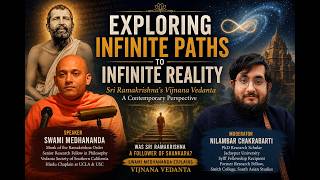 1:42:18
lecture
Was Sri Ramakrishna a Follower of Shankara? Swami Medhananda Explains Vijnana Vedanta
 1:05:50
interview
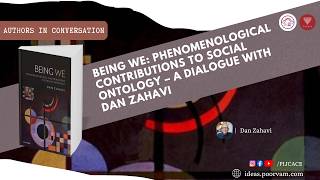
Being We: A Philosophical Dialogue with Dan Zahavi | PIJCACE Authors in Conversation
 1:12:40
lecture
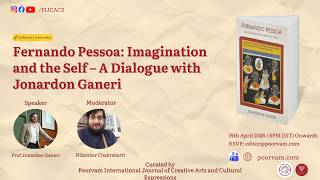
Is Your Avatar Just a Skin? Jonardon Ganeri on the True Meaning of Avatara | Authors in Conversation
 1:24:15
lecture